The shell stitch creates a nice texture on its own or you can dress it up by adding stripes.
Subscribe to My Crochet Channel or go to: YouTube.com TanisGalik
To crochet the shell foundation chain, each shell requires four chains, plus one for the end single crochet and one for the turning chain. For the three shell sample, it required a 14-chain foundation chain (3 x 4 = 12 + 1 + 1 = 14).
 Row one begins and ends with a single crochet. After completing your foundation chain, make a single crochet in the second chain from the hook. Skip one chain and in the next chain made five double crochets. Usually shells are made with a double crochet or a triple crochet. They always are an odd number so there is a center stitch. Skip one chain and make a single crochet in the next chain. Continue across alternating between a shell and single crochet, ending the row with a single crochet. Chain 3 and turn.
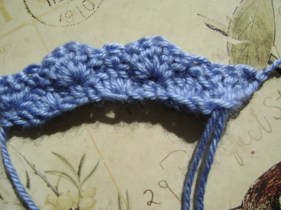 Row two begins and ends with a half shell. Since there are five double crochets in this pattern, half of a shell is three double crochets. The chain 3 is the first double crochet. Make two more double crochets in the same space. Work a single crochet in the center double crochet (#3) of the previous row shell. Make five double crochets in the next single crochet of the previous row. Continue working across, alternating shells and single crochets in the top of the previous row shell, ending with three double crochets in the last single crochet (half shell). Chain 1 and turn.
Row three begins and ends with a single crochet. Make a single crochet in the top of the previous half shell. Make a five double crochet shell in the next single crochet. Work across the row alternating a shell and single crochet, ending with a single crochet. Chain 3 and turn.
Continue alternating Row 2 and Row 3 until half of desired length is reached.
You notice one edge of your fabric has a wavy shell edge and the other side is flat. When you are using a shell pattern to make a scarf, afghan or baby blanket, make the flat edge your center. After finishing one side, work the flat edge with the shell pattern by turning the fabric around. Begin again with a single crochet row. Continue alternating the pattern rows in this new direction. When you finish, both sides will have a lovely wavy shell edging.
Because of the number of stitches in one space, the shell stitch makes a thick, textured fabric. This stitch creates a pretty pattern even without changing colors. However, it also is the perfect stitch for creating stripes using your stash to crochet some beautiful items.
 After working a single crochet shell row (a row that begins and ends with a single crochet and shells in between), turn the fabric to the wrong side.
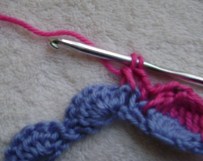
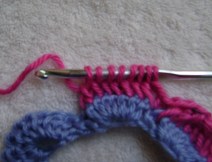
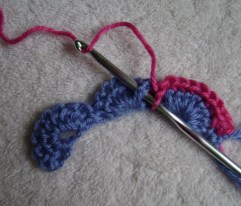 Insert the hook from the front to the back (the reason it is called a front stitch) and to the front again under the first double crochet post of the shell, lifting the post up. Yarn over, pull the yarn around the post, yarn over and pull through the two loops on the hook, completing a single crochet.
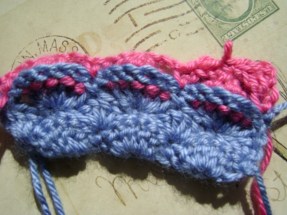
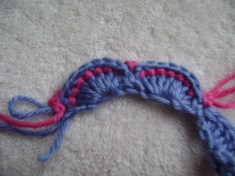 Pops of color peeking through the shell edge adds an interesting touch to any plain shell project.
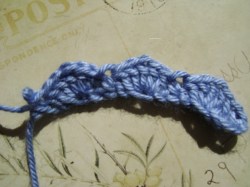 After working a single crochet shell row (a row that begins and ends with a single crochet and shells in between), turn the fabric to the wrong side.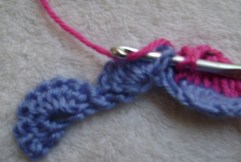
 Blueberry Parfait Afghan, Episode 501. A beautiful Granny Square made from various shades of blue and cream that create an eye-catching afghan ready to decorate any room in your house.
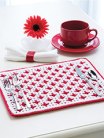 Reversible Interlocking Crochet™ Placemat, Episode 507. A reversible placemat with one side consisting of white checkerboard squares on a red background and the other side displays red “stars” on a white background. You can change your table setting to fit your mood or the celebration.
 “Rows of puff stitches look like gumdrops in this adorable baby blanket that will be a sweet treat for any new arrival. Just change the color palette for a baby boy.”
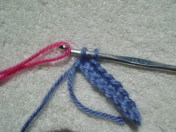 This is one of the simplest ways. Before completing your current stitch, with two loops left on the hook add the new yarn by simply pulling the new loop through the two loops on the hook. Then continue working with the new yarn. I personally never feel too secure using this technique. So I would at least use the second technique.
 The second way is to add a simple knot, tying the two yarns together. When you pull the knot through the two loops on the hook, it is hidden. However, you have the ends to deal with. You can work the ends in as you continue crocheting with the new yarn, which is what I usually do. However, if you are changing colors quite often, this can be unpleasant. If you are changing colors at the end of the row and floating the old color up the edge to use in another row, this float will be worked over later in the border. However, if that is not possible, the double slip knot could be the answer.
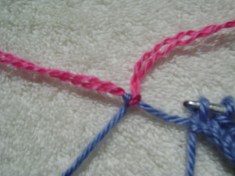 Pick the location of the knot, wrap the new yarn around the old yarn and create a simple slip knot in one direction. Then take the old yarn end and wrap it around the new yarn, creating a simple slip knot in the other direction. Pull the ends, tightening both knots at the same time. It’s important to pull the knots very tightly. Take a pair of sharp scissors and cut the ends off very close to the knots. Always recheck the join by pulling the yarn strands again to make sure the knots hold. When you continue crocheting, the knot will disappear inside the two loops on the hook as you complete your stitch and best of all, there will be no ends to weave in.
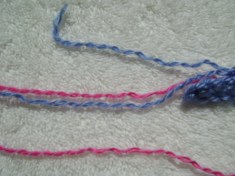 But what if I don’t want a knot at all? What if I’m working in the middle of a row and I don’t want a possible bump? Or I’m working with fine yarn? (Of course, this technique can be used with any weight yarn.) In this case I can split my yarns and blend them together. Usually this technique is used with the same color yarn. However, maybe I’m making a scrap yarn project and instead of having sharp breaks in color, I want the two colors to blend before I change. (In this case, I would work with at least 12″ of overlap.) Take 6″ of each yarn end and split the yarns apart. Take one half of one yarn end and one half of the other yarn end and work the two yarns together as one strand, until you come to the end of the first yarn. Pick up the other section of the new yarn and continue working that yarn strand as a whole. You will have split ends hanging out the back or wrong side. You can either weave in the ends (preferred) or take a sharp pair of scissors and cut them off.
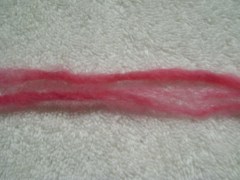 Another way to change yarn is to felt the two ends together. Obviously, this has to be done with yarn that can be felted such as a wool yarn or an animal blend (NOT superwash wool). Again, this technique is usually used with the same color yarn. However, as previously stated you may not want to jump from one color to another; you may want to blend the colors before beginning the new color. Unravel two or three inches of each yarn end. When the fibers are separated, dampen the ends with water. Work the fibers together with your fingers or roll them between your palms. It may take a little while to get the fibers to blend completely (just as when you normally felt an item). When the fibers are well meshed, allow the join to dry. When dry, the ends will be felted together and you can continue crocheting as if working with one strand of yarn.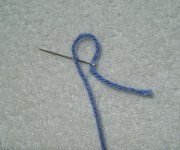


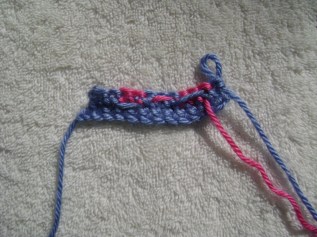 When you have the last two loops on the hook, drop the old color to the back and pick up the new color with a loop to complete the stitch. As soon as the new stitches are completed and the last two loops are on the hook, drop the current color to the back and pick up the previous yarn again. Carry or float the previous color yarn across the back of the fabric. Be careful not to pull it too tightly, otherwise you’ll distort the tension of your stitches. The yarn loops carried or floated across the back of your work are visible on the back. (You can use the same technique working along the side edge when changing colors for a new row.) However, it’s best not to have too many stitches (two or three) float along the back or three or four rows along the edge. On the edge you’ll work a border around the edge so the floats will be hidden. However, if you’re working a Fair Isle design, float or loop lengths on the wrong side of the panel of two or three stitches might work well. But if you are making something where catching the floats or loops would be possible, it would be better to encase them.
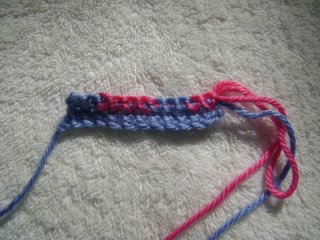 When changing to the new color, carry the previous yarn across the top of the stitches of the row below. Continue working with the new color yarn, working over the yarn carried along the top, encasing it in the new stitches. When changing color again, carry the old color over the top of the previous row’s stitches and encase this yarn as you work with the new color yarn. Your yarn will be ready to use each time you want to change color. On the right side the color change will have clean edges. On the wrong side the stitches will not have any loops carried across. The only possible problem is color bleeding. If the colors have a great contrast such as black and white, the black yarn would cover over the white encased stitches. However, the white stitches might allow the black encased yarn to peek between the white stitches or cast a shadow through the white stitches. The best way to handle this situation is to use the drop technique.
 After changing to your new color, drop the previous color yarn to the back or wrong side. If I am working with blue, I drop the blue yarn to the wrong side and continue with my new pink color. When finishing with these pink stitches, I want to return to using blue. This time I pick up a new skein or ball of blue. I use this new ball of blue until I am finished with these stitches. I keep adding new balls of yarn every time I change colors. Obviously if you are working with a number of skeins, it can become a little awkward. If you only need a small amount of yarn, roll a small ball or skein to complete the number of stitches you will need for this section. This really works well for color blocking or Intarsia work where a clean edge is needed.
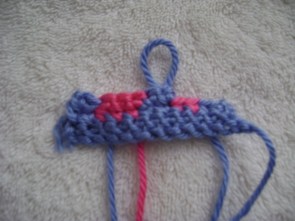 you turn your work and begin crocheting on the back or wrong side, continue to drop your yarn to the wrong side (which is now the front). The reason for this is you want the small loops created as you change color to remain on the wrong side. The right side will remain free of these extra loops so it will have a clean change of color.
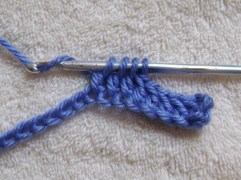
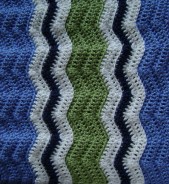 The basic chevron stitch consists of valleys and peaks creating a gentle wave. Whichever pattern you follow, the important thing is to always balance your valleys and peaks. I’m uniting or decreasing three double crochets in the valley and increasing three double crochets in the peak. Each chevron design will be different – decrease five and increase five or unite two, chain one, unite two and increase two, chain one, increase two at the top.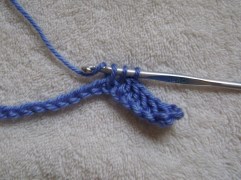
 Tanis Galik - Crochet Teacher